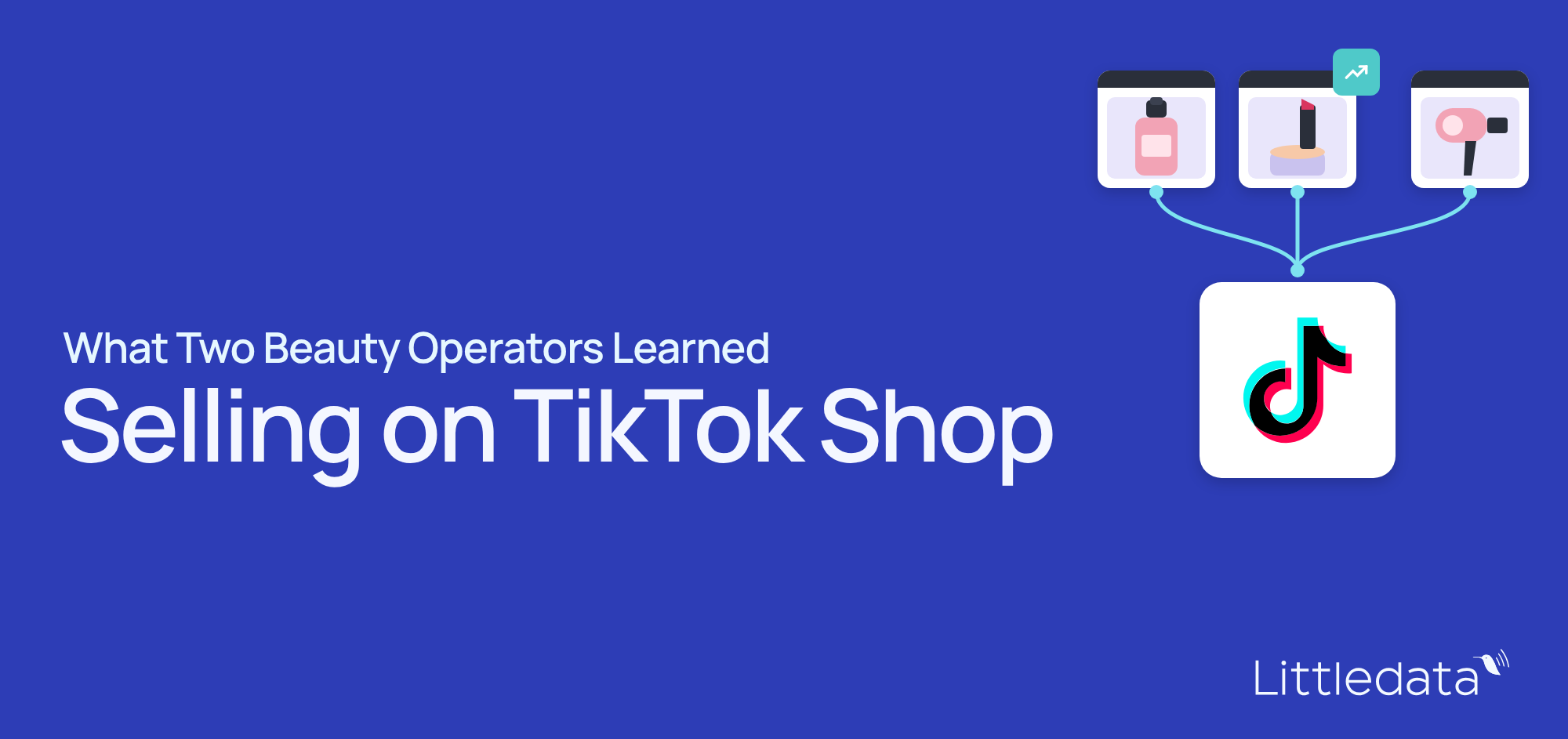
What Two Beauty Operators Learned Selling on TikTok Shop
by Edward Upton
Last month I sat at a breakfast with the CMO of a UK mass-market beauty brand, the head of paid media at a $400M hair-tools brand, and the person who ran TikTok's measurement team for six years. The question on the table: is TikTok Shop making anyone money, and how would you know?
The short answer to the first question was no. The CMO put it plainly:
"No one is. [Even] the K-beauty brands are running at a loss or washing their face."
Her own shop took about four months to break even, and she now treats the channel as 50% sales and 50% marketing spend.
The second question is the one nobody in the room could answer. Both brands believe TikTok Shop lifts their Amazon, retail and DTC sales. Neither can prove it to the people who sign off the budget. Everything else they have learned in two years on the platform follows from that gap.
TikTok's value is the halo, not the direct sales
The CMO's finance team back TikTok Shop for one reason: it created visible demand in retail. Her £60 electrical product went viral on TikTok and became the most-searched product on a major retailer's site. A 25,000-unit order was air-freighted to keep up. Around 1M units later, it is still her biggest TikTok seller.
The hair-tools brand is not on TikTok Shop yet. Their UK pilot launched this month as the template for a global rollout, and TikTok Ads is already their third channel after Google and Meta. They expect the same pattern: the sale lands on Amazon or in a store, not in the shop.
The problem is that nobody can see it. The CMO pays a third-party tool to overlay TikTok views against Amazon sales and watches the correlation. Her DTC store is not plugged in. Local store teams at the big retailers do not see any benefit from central TikTok activity. The hair-tools brand has three years of history in a marketing mix model, and TikTok Ads still shows lower incremental ROAS than other spend. The ex-TikTok lead confirmed what both suspected: incrementality and geo tests were never possible on TikTok Shop from inside the platform.
The content that sells is content brands would never repost
The content that sells on TikTok is often surprising, and so needs a high degree of creative independence.
The best-performing video for the £60 electrical was a middle-aged woman in a dressing gown pointing repeatedly at the box, with daytime TV playing in the background. Millions of views, millions in sales. The CMO "had to get over myself on it" and the hair-tools brand expects this to be the biggest internal fight for a premium brand.
Affiliates make their own videos regardless of the brief, and the host's research estimates 70% of TikTok Shop sellers are reliant on affiliates for content. Half the winning videos do not show the product in use. Every attempt the CMO's agency made to raise production quality, from guest make-up artists to higher-end hosts, was less successful commercially.
It's partly about the demographic. A daytime-TV audience of middle-aged women bought from the dressing-gown-wearing woman, which should change the affiliate brief and the paid targeting. Most brands don't feed TikTok learnings back into their wider ad strategy.
Live is shrinking as a share, but still worth doing
Live shopping is ~15% of TikTok Shop sales for both UK brands and falling. In the US, Shop-tab attributed sales rose from 36% to 51% over the past year while live fell from 14% to 8%. Shoppers now want product information before they buy, and the novelty of the live deal is wearing off.
Neither brand would stop doing lives. Viewers stay about 30 seconds and buy at the lowest price of the week, QVC style. Plus TikTok rewards brands that go live with organic reach, and both saw the lift in their organic numbers after lives. The CMO's verdict on the platform events that promise reach above a GMV threshold:
"It is all designed to get you spending more inside the platform"
Give TikTok credit for the sales it drives. Littledata's TikTok connection sends every Shopify order to the TikTok Events API server-side, with hashed customer data for Advanced Matching, so TikTok Ads attributes more orders and optimizes toward real buyers.
Plan for trial and error, not virality
The CMO launches new products weekly across all channels, but only seeds 500 units into TikTok Shop, because affiliates only post about products they expect to earn commission on. The lesson is fewer products, sampled deeper. A leading skincare brand seeds around 9,000 units per campaign, 18x the CMO's 500, so enough affiliates get product for one video to break through. You cannot pick that video in advance: a tanning accelerator sold thousands off one creator post nobody planned.
Only a small percentage of creators perform. Finding them and nurturing them is the main source of advantage on a channel with fixed affiliate costs. Trust categories, such as hair loss and skincare, need creator review content to convert at all.
Europe is 12-24 months behind the UK
Spain is dismissive. Italy and the Netherlands have not seen halo data. Greek distributors did not understand the concept. Both brands read this as an opportunity to lead underdeveloped markets rather than fight in a mature one. TikTok's own advice has flipped from one ad account per market to one global account with the algorithm matching language, and Shopify Markets makes the single-backend model workable: one store, localized storefronts, local ad accounts fed from one order stream.
Why the halo is a data problem
Everyone in that room was learning on the job. Guidance from TikTok reps was described as "haphazard" and "never strategic". The agencies are growing as fast as the brands and know as little.
That is a data layer problem, not a media-buying problem. Three things are within a brand's control today:
- Match rate — Send conversions with hashed customer data (email, phone, IP) reliably and consistently, so TikTok can attribute rather than guess. The platform cannot build a device graph for your brand; you can only feed it better.
- Profit signal — Pass gross margin net of returns and cancellations, so the algorithm stops rewarding high-revenue, low-margin orders. This matters when a hair dryer and a night cream sit in the same catalog.
- Custom conversion events — Bid only on the hero or high-value product. One high ticket device brand found its algorithm swamped by £50 supplement orders until it created a high value only conversion event. The CMO connected this immediately to her affiliate problem: paid can be steered to the products that matter commercially, even if affiliates cannot.
The cross-channel loop works the same way. As long as a TikTok Shop order flows through the Shopify order system with a customer email, it can be sent back to Meta or Google as a conversion, closing the loop on the ad that person saw last week.
Prove the other 50% of the value
If TikTok Shop is half about pushing other channels, the question for peak is not whether the shop P&L washes its face. It is whether you can show the lift in the channels where the sale actually lands, before someone asks for the budget back.
That means feeding every ad platform the orders from TikTok Shop, with the customer identifiers included, so the credit for a TikTok Shop purchase can be tied to other platforms. Every platform optimizes for itself. The brands that come out with a TikTok plan for next year are the ones with their own cross-channel view of what TikTok actually did.