Identify more shoppers with Persistent ID
Persistent ID stitches anonymous sessions to known customers across devices so your flows trigger and your ad signals stay sharp.

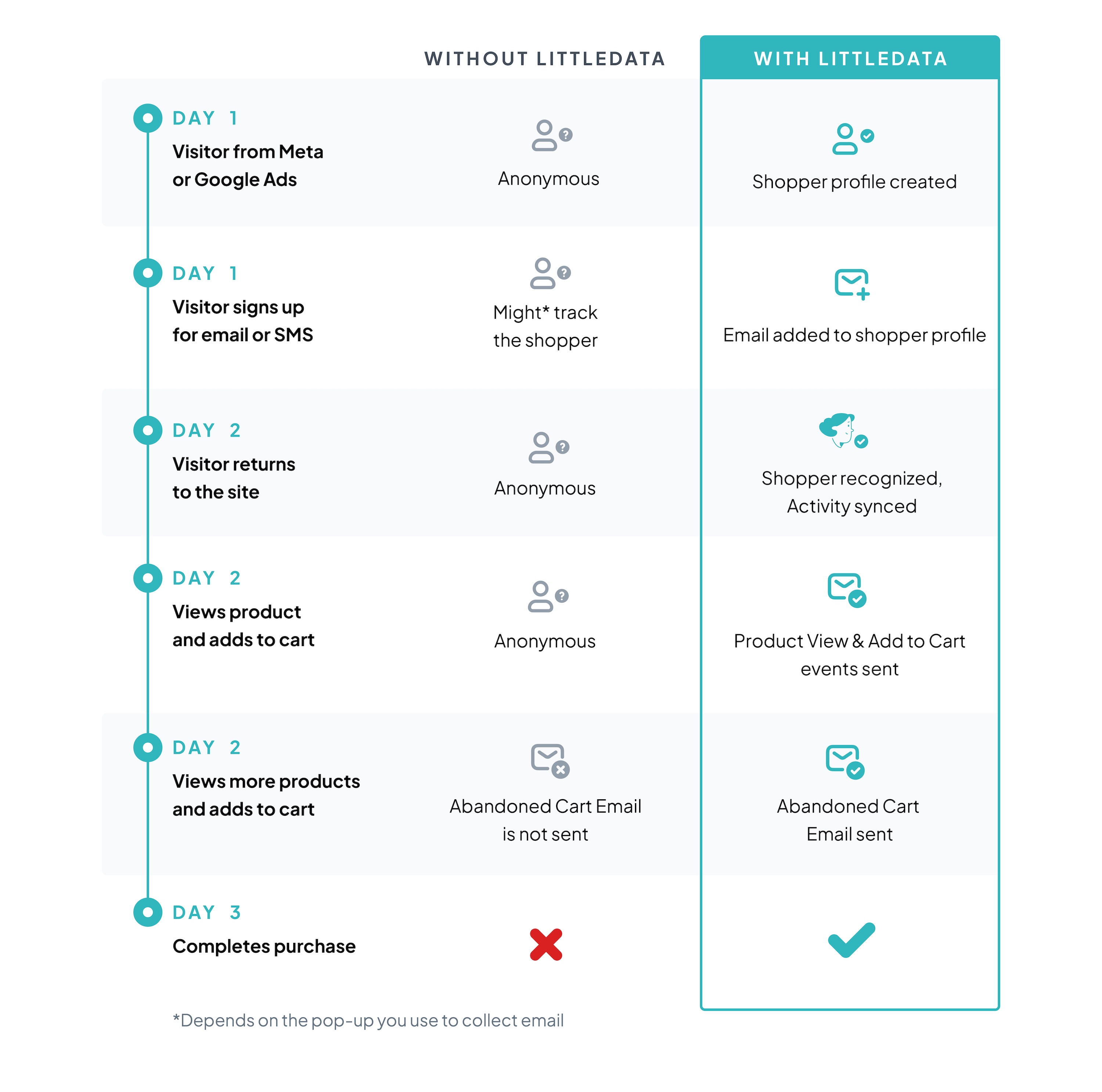
Returning shoppers look like strangers
Safari, iOS updates, and ad blockers wipe browser cookies and break the link between your shoppers and their sessions. A customer who clicked your Meta ad last week, browsed on mobile, then returned on desktop is counted as three different people.
- Attribution breaks. Returning buyers enter your funnel as new visitors, inflating acquisition costs and misfiring retargeting.
- Flows miss the window. Klaviyo can't trigger abandonment flows for sessions it can't identify.
- Ad platforms learn from noise. Meta and Google Ads optimise on incomplete signals, so your CPA climbs.

Persistent ID stitches them together
Our identity graph aggregates multiple customers and persists them for up to a year, far beyond the typical one week limit of browsers.
When a shopper returns, Persistent ID reconnects their session to their known profile automatically. Key identifiers are anonymized and consent is respected throughout.
Identity resolution with and without Littledata

Raise your Meta EMQ score
Meta's Event Match Quality (EMQ) score measures how well your events match to real Facebook users. Persistent ID gives Meta a more complete picture of more customers and improves audience matching and ad costs.
- Lower CPA. Better audience matching improves ad targeting and acquisition costs.
- Higher customer match rates. More of your events tied to real Meta profiles.
- Improve ROAS. Ad spend working from a complete signal, not a partial one.
Grow your Klaviyo audience
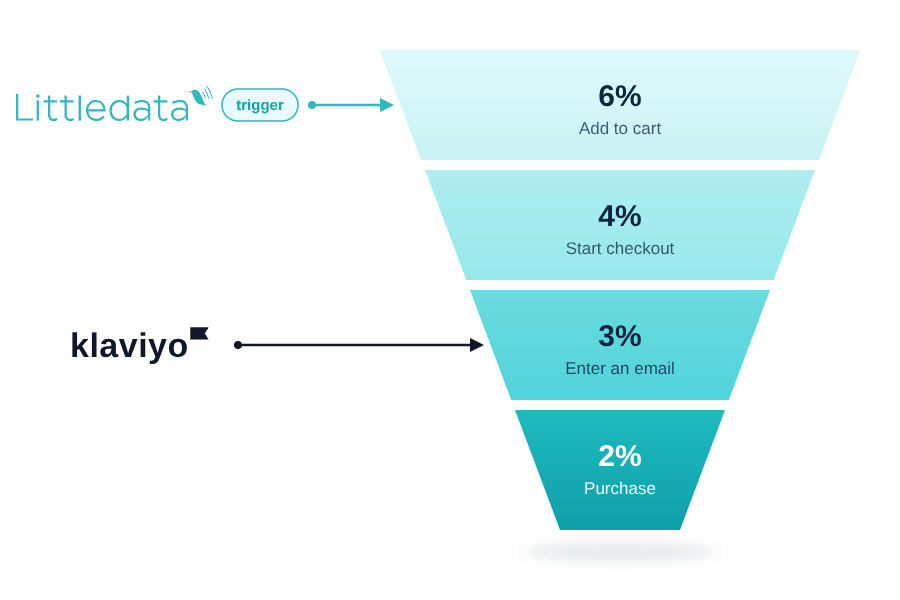
Klaviyo's native triggers fire only after a shopper enters their email. Everyone who reaches checkout anonymously, often the majority, falls outside your abandonment flows entirely.
Persistent ID matches shoppers' cart adds and checkout starts to profiles that Littledata has previously identified. Your abandonment audience grows by around 30%.
Flows trigger at add to cart (around 6% of sessions) instead of waiting for email entry (around 3%), so you can target emails higher in the funnel for 2× performance.