Change the Conversion Signal, Not Just the Ad Creative
by Edward Upton
A creative refresh changes what Meta shows. It does not change who Meta shows it to. If your CAC keeps climbing, the fix is a more specific conversion signal, not just more video variants.
I was interviewing an agency leader this week and one phrase struck me:
"What worked well three years ago doesn't work now. And brands often haven't reviewed their tactics."
He was talking about email marketing, but the same could be said of ads.
Many brands I talk to are feeding Meta the same data they fed it in 2023, and they wonder why CAC keeps rising.
How a winning tactic goes stale
Their performance agency got one tactic down to a T. One hero product, one angle, one creative style, one conversion signal. It worked well for two years. Until it didn't.
So the brand fires the agency and finds a new one.
The new agency reviews the account and prescribes a creative refresh: different angles, different messaging, same signal. They use the latest AI video tools to maximize creative diversity, spin up 100 video variants, and see which one wins after the learning period.
And this works. A bit.
Why new creative reaches the same old audience
The agency has no control over the audience Meta serves the creative to. Meta picks the audience from the conversion signal. If the signal is "purchase", Meta looks for people who resemble past purchasers.
As a result, the new videos go to an audience that looks very like the one that already bought. That audience has fatigued on ads for the same product, and they still don't buy more.
The creative changed. The targeting did not.
Break out with a more specific conversion event
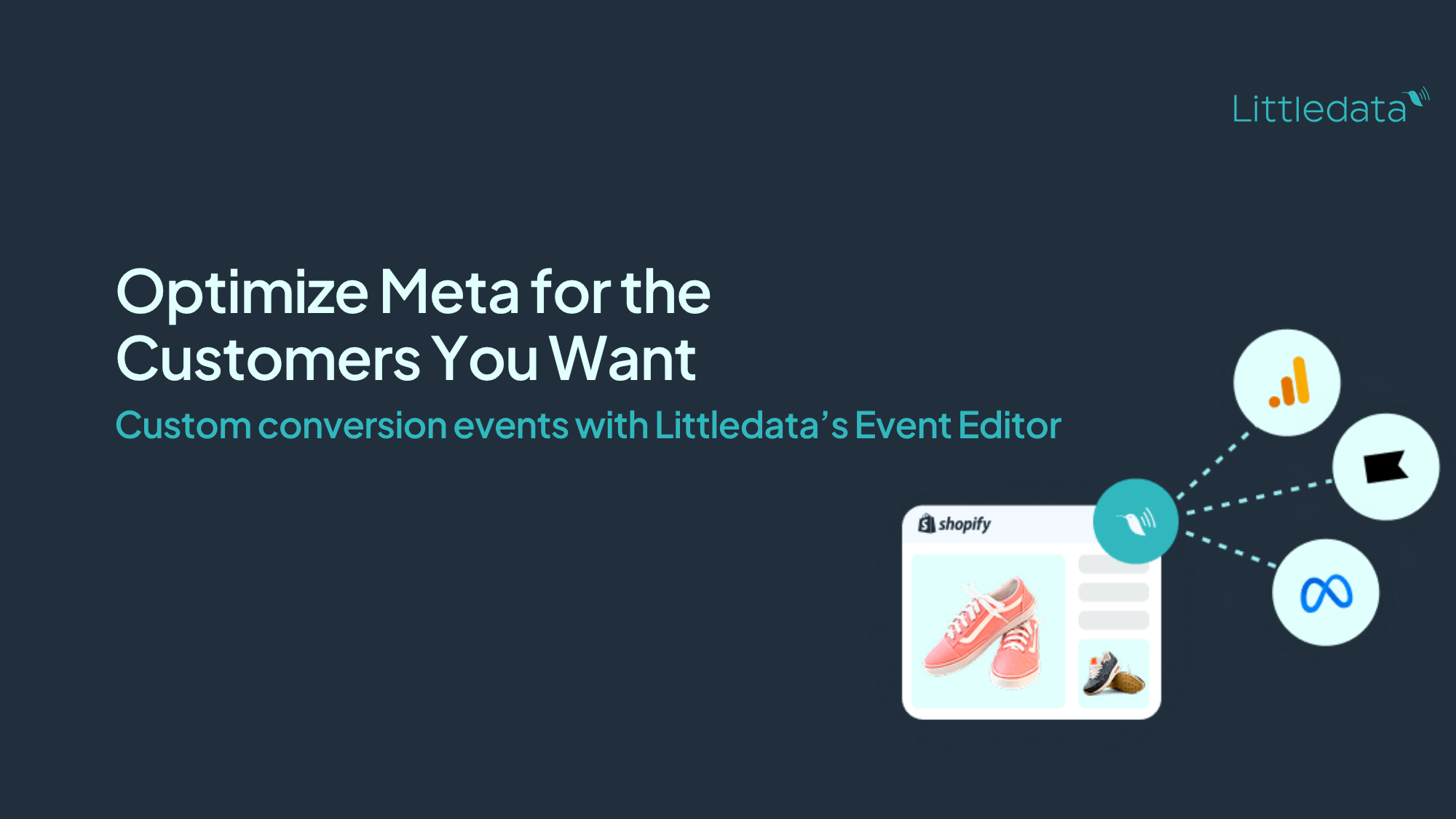
Littledata's answer is to define custom conversion events. With the Event Editor you can reward a campaign only when it converts in a specific way:
- Net new customer: a shopper who has not bought from you before.
- Larger basket: a customer who buys more than one product, or spends more than a set amount.
- New product category: a purchase from a category you are trying to grow.
- High-margin category: a purchase that protects profit, not just revenue.
Each of these gives Meta a different set of people to model from. Optimize for net new customers and Meta stops chasing the same lookalike pool of repeat buyers.
Hundreds of our customers are doing this now to give Meta optimization signal diversity.
Pair the new signal with the new creative
Yes, you still need to switch up the creative. But new tactics work best when combined with a more specific signal.
Once you find a creative type that drives your brand-specific conversion goal, scale it. Use AI to produce variants, and use Meta's built-in content generation features to iterate on the winning angle.
The takeaway
If your ads feel like they perform worse every month, ask whether you are still using 2023 tactics in 2026, and into 2027.
You can only expect different results if you change both the ad creative and the conversion signal.