Optimizing Your Shopify Store: How Littledata Enhances the New One-Page Checkout
by Edward
TL;DR:
Littledata supports both the new one-page and traditional three-page checkouts on Shopify. No further action is required from merchants. However, if you want to learn how Littledata can optimize your brand after the one-page checkout update, keep reading!
Shopify’s One-Page Checkout: An Overview
Shopify recently introduced a one-page checkout feature aimed at simplifying and speeding up the purchase process. This change consolidates the steps of the traditional three-page checkout into one streamlined page. For most merchants, the expected benefits include:
- Faster checkout: With all steps combined on one page, customers can make purchases more quickly, which can reduce cart abandonment.
- Improved user experience: Fewer clicks and smoother navigation can lead to higher user satisfaction.
- Mobile optimization: Mobile users benefit significantly from the faster, more condensed format.
However, while some stores may see positive outcomes from these improvements, the transition hasn’t been seamless for all.
One-Page Checkout vs. Legacy Three-Page Checkout
The traditional three-page checkout setup had a significant advantage in its ability to capture email addresses early in the process. By requesting the customer’s email upfront, DTC brands could collect contact details even if the customer abandoned their cart, allowing for follow-up through abandoned cart emails.
In contrast, the new one-page checkout does not have this built-in step, leading to potential issues like:
- Lower conversion rates: Without a commitment signal from entering an email upfront, some users may not complete the checkout.
- Fewer abandoned cart emails: Less data capture means fewer opportunities for retargeting potential customers.
How Littledata and Klaviyo Address the Gaps
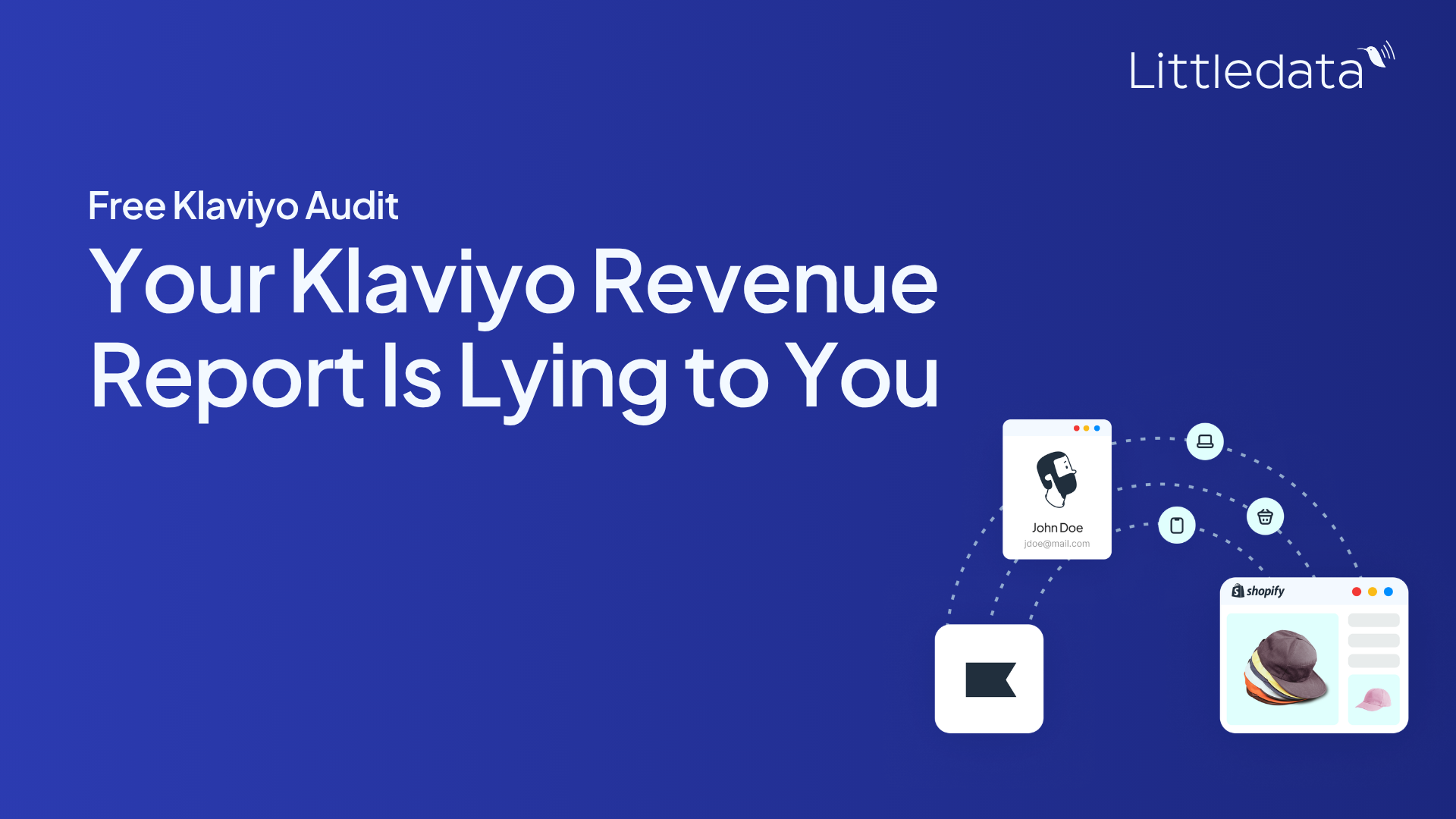
Littledata’s Klaviyo integration offers a solution to some of the challenges posed by the one-page checkout. By connecting to Klaviyo, brands can access more customer identifiers, enhancing their ability to track pre-purchase customer behavior. This setup ties back to identity resolution, ensuring more accurate tracking of customer interactions.
Benefits include:
- Enhanced data capture: Littledata’s integration allows DTC brands to gather more comprehensive customer data, even if the one-page checkout skips email capture steps.
- Improved targeting: With better data, brands can create more targeted and effective retargeting campaigns.
Pros and Cons of Shopify’s One-Page Checkout
Pros:
- Faster purchasing: The simplified checkout flow benefits mobile users and those seeking quick transactions. This could significantly reduce cart abandonment, particularly in mobile-first markets.
- UI improvements: The new design is cleaner and inherits previous customizations, creating a slightly enhanced user interface.
- Standardization: Shopify’s move to a standardized checkout across all stores may build customer trust through consistency with larger retailers.
Cons:
- Customization limitations: Non-Shopify Plus users cannot revert to the multi-step checkout, reducing flexibility in customizing the checkout experience to match specific branding or business needs.
- Technical bugs: Some users report technical issues, like problems with autofill or address deletion, which Shopify is addressing over time.
- Potential performance impact: Third-party apps integrated into the checkout process can slow down the page, especially with large scripts or images. This can hinder the performance of the one-page checkout.
Impact on Conversion Rates
For many stores, particularly those with mobile-heavy traffic, the simplified flow of the one-page checkout could lead to a boost in conversion rates by facilitating faster decision-making. However, the impact might vary depending on the nature of the products being sold:
- Low-involvement products: One-page checkout likely excels here, encouraging quick, impulse purchases.
- High-involvement products: Customers purchasing more expensive or complex items may prefer a step-by-step process, and the one-page checkout might not be ideal.
Monitoring feedback and being ready to make necessary adjustments is key.
Handling Upsells with One-Page Checkout
For DTC brands that rely heavily on upselling, the one-page checkout requires careful planning to ensure the presentation of additional product offers doesn’t overwhelm the page or confuse customers. DTC brands must balance presenting upsell opportunities with maintaining a clean, effective layout.
Conclusion
Shopify’s one-page checkout aims to streamline the purchasing process and improve conversion rates by reducing friction during checkout. However, it comes with both benefits and challenges. Littledata integrations, especially in combination with Klaviyo, help mitigate some of the issues that have surfaced, offering brands robust tools to continue optimizing their customer experience in this new checkout landscape.