What’s new with Klaviyo’s server-side tracking
by Edward
Updated: 11th October to reflect further testing
Klaviyo announced three features this week to improve tracking and audiences for flows. Is this a major feature release for Klaviyo’s Shopify integration? Should you enable the updated integration?
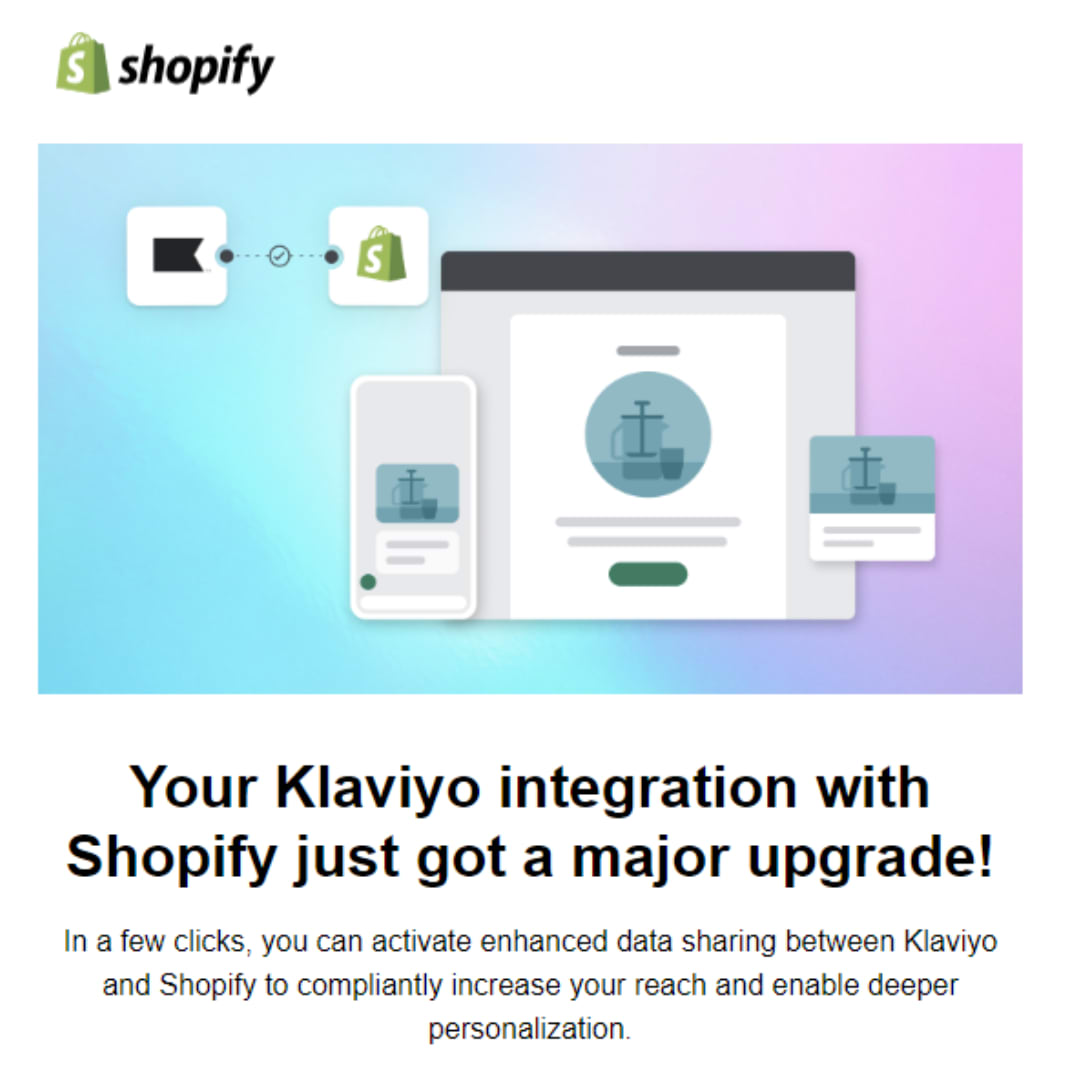
Klaviyo’s on-site tracking has struggled to identify users who are active on your storefront and also on your email list.
Littledata’s server-side tracking for Klaviyo can double abandoned cart and abandoned browse flow revenue – even compared with Klaviyo’s new tracking.
Let me provide a breakdown:
- What new Klaviyo features announced
- How they differ from Littledata’s integration with Klaviyo
- Why Littledata is still a big upgrade for brands wanting better performing Klaviyo flows.
#1: Tracking behavioral events
Klaviyo is now using Shopify web pixels to track common pre-checkout behavioral events on the storefront – Viewed Collection and Submitted Search.
I’ve written before about how web pixels don’t really solve the problem of modern customer tracking. The fact is that tracking libraries and their cookies are increasingly blocked on the browser, and this is only going to get worse in the coming year. Unfortunately Klaviyo’s new “app embed” faces these same challenges.
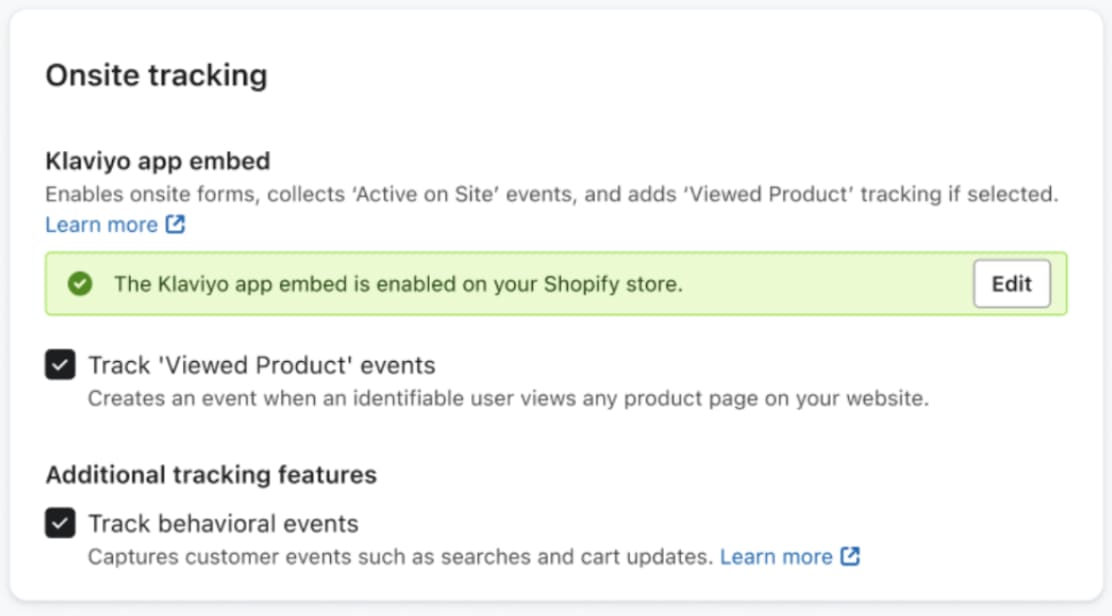
A couple of Klaviyo agency partners have confirmed what we’ve found in our own tests: web pixels don’t reliably fire for all visitors, and so the new Added to Cart event (via web pixels) performs less well – tracking a smaller audience – than the hard-coded script that Klaviyo previously recommended.
Klaviyo’s new web pixels approach allows tracking of Viewed Collection and Submitted Search events – but this is not that useful for audience building, being high up the funnel with limited buying intent.
Klaviyo apparently tracks the Added to Cart event server-side (see #2 below) – which avoids the need for an additional tracking script to be pasted into the Shopify theme, but doesn’t seem to result in more accuracy.
Instead, I’d recommend using Littledata’s server-side Added to Cart and Viewed Product event for high-performing abandonment campaigns. There is simply no substitute for consistent Session Enrichment and server-side tracking.
This Klaviyo Added to Cart event also lacks the enriched product data that Littledata sends.
Like many of our automated server-side events, Littledata’s Added to Cart event for Shopify storefronts includes the entire contents of the cart, allowing marketers to build higher performing flows, such as personalized cart abandonment sequences or recommendations based on all items currently in the cart, rather than just the last added product.
#2: Shopify server pixel sync
Very few details of this have been released, apart from Shopify marketing it ‘as a server-side data syncing’.
My guess is that it uses Shopify’s server web pixels, currently in closed Beta, to sync adds to cart and orders directly from Shopify’s servers.
That would make it very similar to what Klaviyo did before – but now using Shopify’s recommended new APIs.
In other words, it gives Klaviyo an easy install experience for smaller merchants, and lets Shopify boast that Klaviyo is being Built For Shopify – but it makes little difference to the data quality for larger brands.
#3: Extended ID
ExtendedID is yet to be released, but as we understand it allows matching of a user based on non-Klaviyo cookies (Google, Meta, Shopify etc) to better identify customers across devices.
Here’s a screenshot they shared in the launch video:

This is different to Littledata’s PersistentID, which uses a server-side device graph to persist this ID beyond browser limitations.
We’ll test ExtendedID as soon as it’s released, but we expect PersistentID to be substantially better at matching users on the storefront to the opted-in email list.
The flexibility of Littledata’s PersistentID ensures that users are accurately identified and tracked even if they haven’t interacted through traditional means like email entry during checkout. It results in more comprehensive and consistent tracking of user behavior.
Keep with Littledata
Yes, you should enable the behavioral events and server-side sync in Klaviyo. But it’s no substitute for Littledata.
Littledata specializes in customer tracking – our product team obsesses about accurate data into all your major marketing channels, which improves attribution and performance in Google and Meta, not just Klaviyo.

Events Comparison
| Littledata | Klaviyo | |
| Viewed Product | Server-side | Client-side |
| Viewed Collection | Not tracked | Client-side |
| Submitted Search | Not tracked | Client-side |
| Added to Cart | Server-side | Server-side |
| Removed from Cart | Server-side | Not tracked |
| Checkout Started | Server-side | Server-side |
| Placed Order | Not tracked | Server-side |
| Ordered Product | Not tracked | Server-side |
| Fulfilled Order | Not tracked | Server-side |
| Fulfilled Partial Order | Not tracked | Server-side |
| Cancelled Order | Not tracked | Server-side |
| Refunded Order | Not tracked | Server-side |
| Confirmed Shipment | Not tracked | Server-side |
| Delivered Shipment | Not tracked | Server-side |
| Marked Out for Delivery | Not tracked | Server-side |
| Active on Site | Not tracked | Client-side |
| Web pixels | Yes | Yes |
| Extended ID & Identity resolution | Yes | Not yet** |