Winning on ChatGPT: How to Drive Traffic to Your Shopify Store
by Edward

AI tools like ChatGPT have changed how your customers discover products. But how much traffic can they actually send to your Shopify store, and what makes a product stand out in AI search?
The short answer: it depends on your product category and how well you’ve optimized your product pages. In fact, ecommerce sites like Amazon, Etsy, and eBay have already seen over 300 million visits driven by AI-powered search and discovery.
This blog will show you what works (and what doesn’t) based on real-world examples, including:
- Which types of products are winning in ChatGPT recommendations
- Why product data, reviews, and site structure matter more than ever
- How you can get your Shopify products surfaced by AI search tools
This guide is based on a recent YouTube walkthrough by Edward Upton, CEO of Littledata, who analyzed what’s working for Shopify brands today.
Is ChatGPT Traffic for You? It Depends on What You Sell
AI search tools are mostly used for research at the top of the sales funnel. That means they’re better suited to products that require comparison and consideration, rather than impulse buys.
High-Consideration Products (High Potential for AI Traffic)
If you sell electronics, baby gear, homeware, or luxury items, your customers are likely searching with ChatGPT or similar tools. These products benefit from clear specs, comparison features, and in-depth descriptions.
Low-Consideration Products (Lower Potential, For Now)
Apparel and food/drink are harder for AI to describe, since purchases depend on aesthetic and sensory experiences. That said, even in these categories, some brands are finding ways to stand out.
How to Make Your Products Stand Out in AI Search
Let’s break down four key strategies, plus examples of how different types of stores are succeeding (or falling short).
1. Use Clear, Natural Language in Your Product Descriptions
AI tools don’t respond well to marketing jargon. They match user questions to product data, so your product pages need to reflect real-world phrasing.
What Works:
-
A high-end electronics brand selling mesh-enabled communication devices used language like “hands-free talk,” “long range,” and “easy group voice chat.” These are phrases customers type into AI tools.
-
A fashion retailer specializing in women’s loungewear saw success by including sizing guidance, stretch, fit notes, and even model measurements, common user queries for clothing.
What Doesn’t Work:
- A luxury shapewear brand used vague language like “support level two” and “engineered body mapping.” These don’t match natural search queries, making the products harder for AI to recommend.
Takeaway: Use descriptive, human language. Avoid buzzwords. Anticipate what your customers would ask a chatbot.
2. Make Reviews Visible and Organized
AI tools treat reviews as high-value content. They’re rich in keywords, user context, and social proof.
Examples:
- The fashion retailer mentioned above also made customer reviews easily visible, included filters like “true to fit,” and pulled summary stats directly into the product listing.
- A premium outdoor cooking brand offered Trustpilot reviews, FAQ sections, and editorial media coverage, creating a content-rich environment for AI tools to crawl.
Common Pitfall:
- The electronics brand had mostly positive reviews, but they were buried below the fold, and the first few visible reviews were negative, which may have hurt recommendations.
Takeaway: Display reviews near the top, use filters like “top-rated,” and include review-based summaries when possible.
Also read: AI Search and Marketing Attribution: What Every Shopify Store Needs to Know
3. Structure Your Site for AI Crawlers
AI tools work like search engines; they crawl, compare, and extract product information. If your product data is hidden or inconsistent, you’ll miss out.
Do This:
- Redirect discontinued products to updated versions or collections (not to blog posts).
- Include structured specs like dimensions, weight, materials, and warranty.
- Use comparison grids like Amazon’s to surface key differentiators.
Takeaway: Keep your site structure clean and ensure AI can access all relevant product data.
4. Mind Your Pricing Across Channels
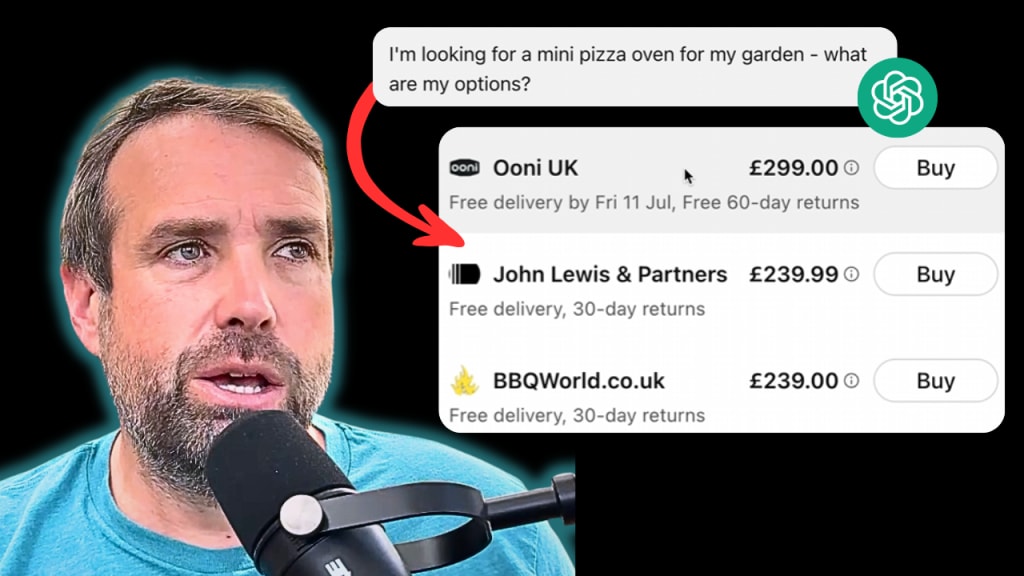
ChatGPT often recommends the cheapest available price, even if it’s not on your site.
If your DTC price is higher than what’s listed on a marketplace or reseller, you might get skipped over in recommendations.
Takeaway: Align pricing across channels where possible, and monitor how your products appear in AI comparisons.
Read more: How to Get More Buyers from ChatGPT: 4 Success Factors for Shopify Stores
How Much Traffic Can You Actually Get from ChatGPT?
Here’s what we’ve seen:
- Most Shopify sites currently get under 2% of traffic from ChatGPT
- Top-performing brands are already seeing 6–10% of traffic from AI tools
- The biggest gains are in high-research categories like home & garden, tech, or baby gear
And this number is only going up.
How to Prepare Your Shopify Store for AI Search
Here’s a quick checklist:
- Write clear, natural-language product descriptions
- Curate and highlight high-quality reviews
- Optimize site structure and redirects
- Include structured product specs and comparisons
- Monitor your analytics for traffic from chat.openai.com
Need help tracking ChatGPT traffic accurately? Littledata automatically sends all your Shopify conversions to Google Analytics and other tools, no extra setup required.
Start Driving More AI Traffic
Shoppers are changing how they search. Are you ready?
Want to see these strategies in action?
Watch Edward’s full YouTube walkthrough
Book a demo with Littledata to optimize your analytics